drift the map
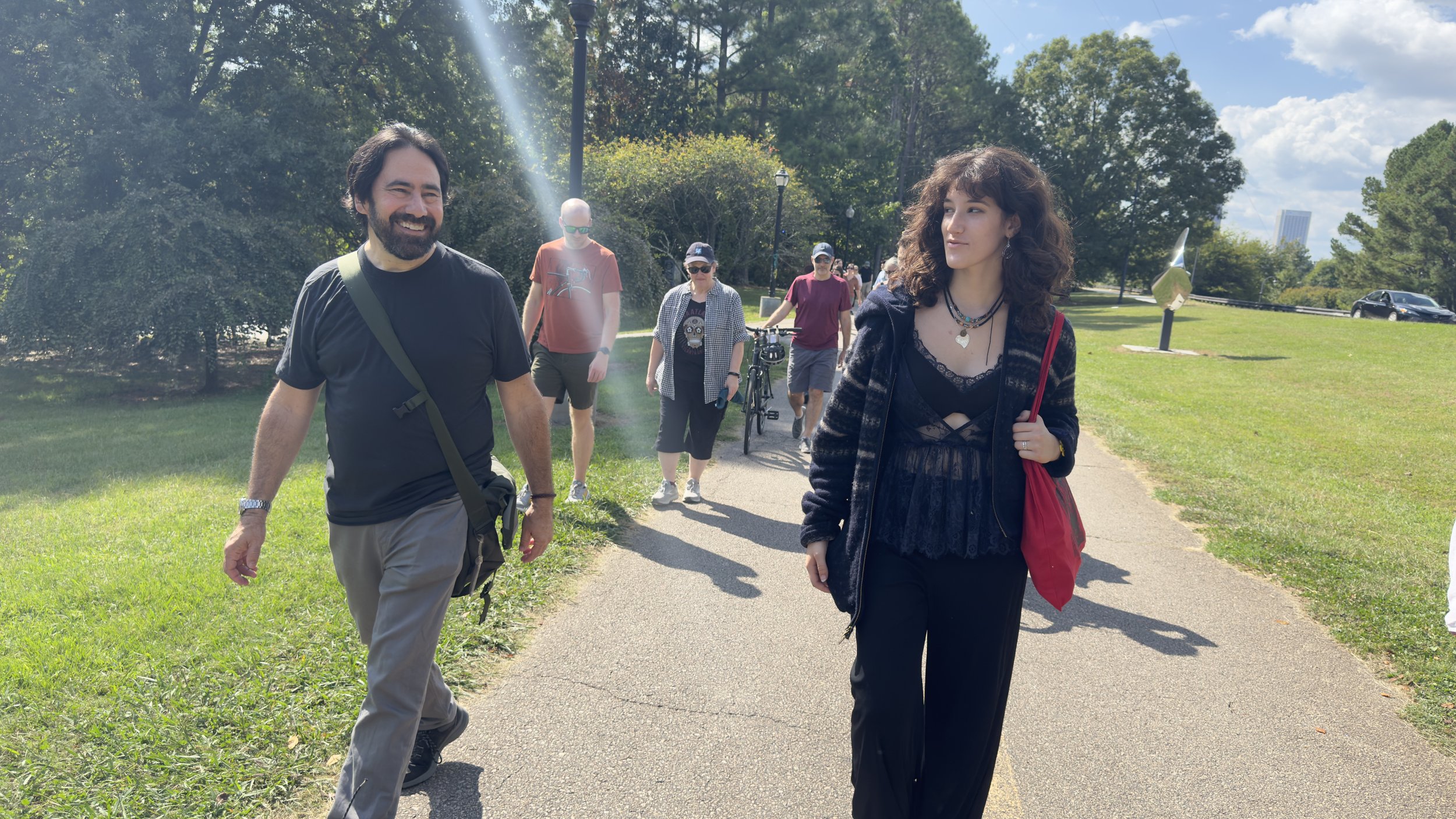
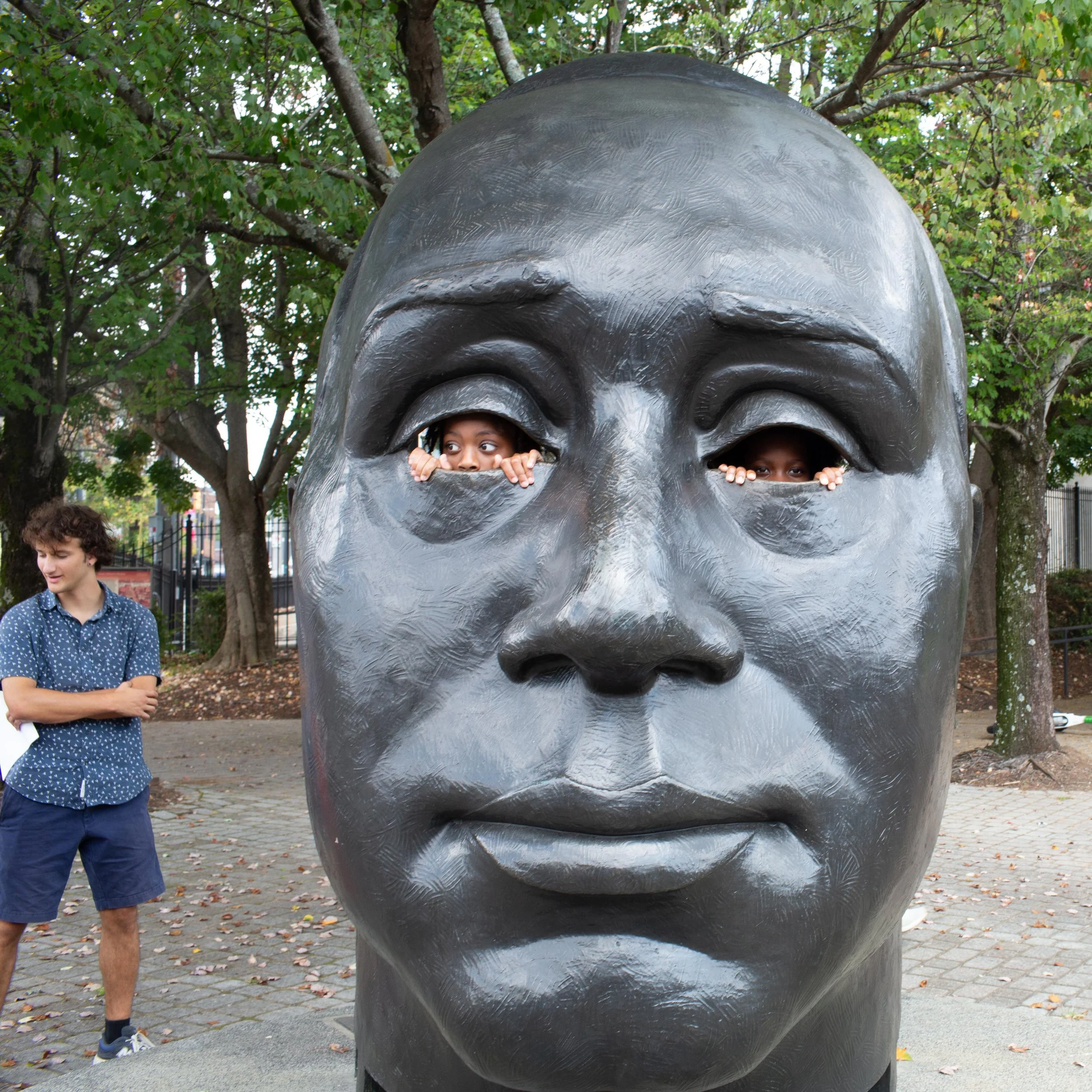
Perhaps my best idea ever was founding the walking series Drift the Map in 2023 with my 16-year old daughter, Mira. These free public history walks use urban walking to imagine the future of historic neighborhoods. Inspired by Jane Jacobs’ "The Death and Life of Great American Cities," our walks always open with the reading of a poem inspired by the location, and typically draw 50-80 participants, including architects, urban planners, City Council members, social justice advocates, and students. I’ve heard so many reports of collaborations and other projects arising out of relationships formed on Drifts. The photographs below show the incredible range of stories that we tackle, and the surprising developments that occur when civically-engaged and curious people are brought together to explore with minimal planning or agendas.
One of the wonderful facts about the Drift events is that people are willing to go on extremely long urban hikes, often through challenging routes. Sometimes people ask me to use a loudspeaker. It is important to me not to do this. These aren’t tours, they’re rambles in the style of the avant-garde Dérives convened in Paris in the 1950s, when artists and intellectuals gathered to explore the psychogeography of the city. The small conversations that result when strangers meet and talk about the city are the point of the Drifts, not any information that I have to convey.
But, I do plan little surprises. I walk the routes in advance and place archival photographs into the sites using augmented reality. When we reach one of these sites, I hand out QR codes for participants to scan on their phones, and they see the photographs in 3D placed at the location where they were taken long ago. People freak out every time.
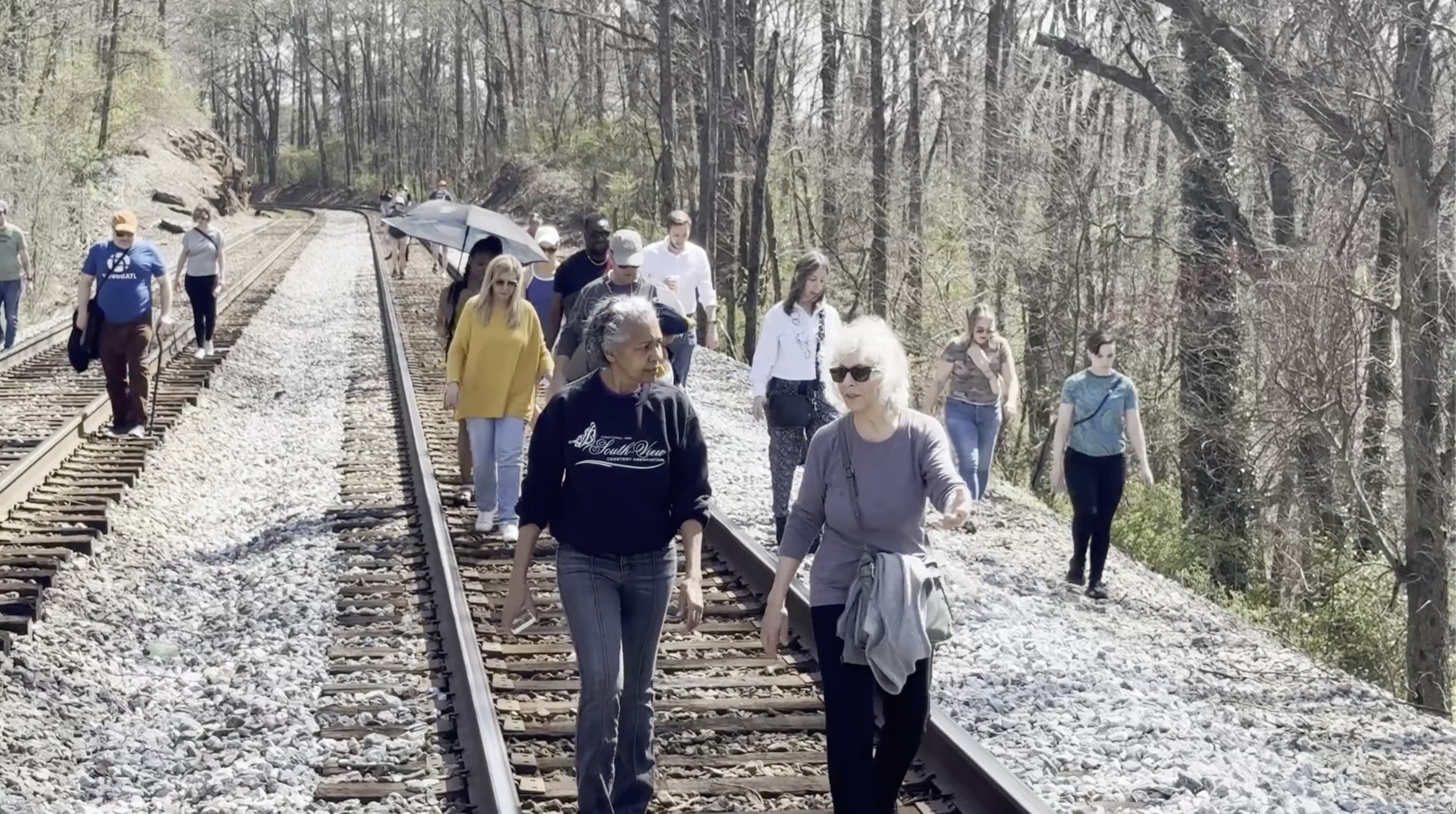
South-View Cemetery, March 16, 2025
55 people turned out on a beautiful spring day to explore historic South-View Cemetery with Winifred Watts Hemphill, who owns and runs one of the nation’s oldest historic Black cemeteries, founded by her great-grandfather, a freed slave, in 1886. After visiting the gravesites of civil rights leader John Lewis, reading poetry graveside at the cemetery’s most notable poet’s grave, and paying respects to the victims of the 1906 Atlanta Race Massacre, the Drift wound up rambling on nearby train tracks in search of a meal at Atlanta’s legendary “Prison Tacos”, a bodega in the shadow of the Federal Penitentiary.
PAST DRIFTS
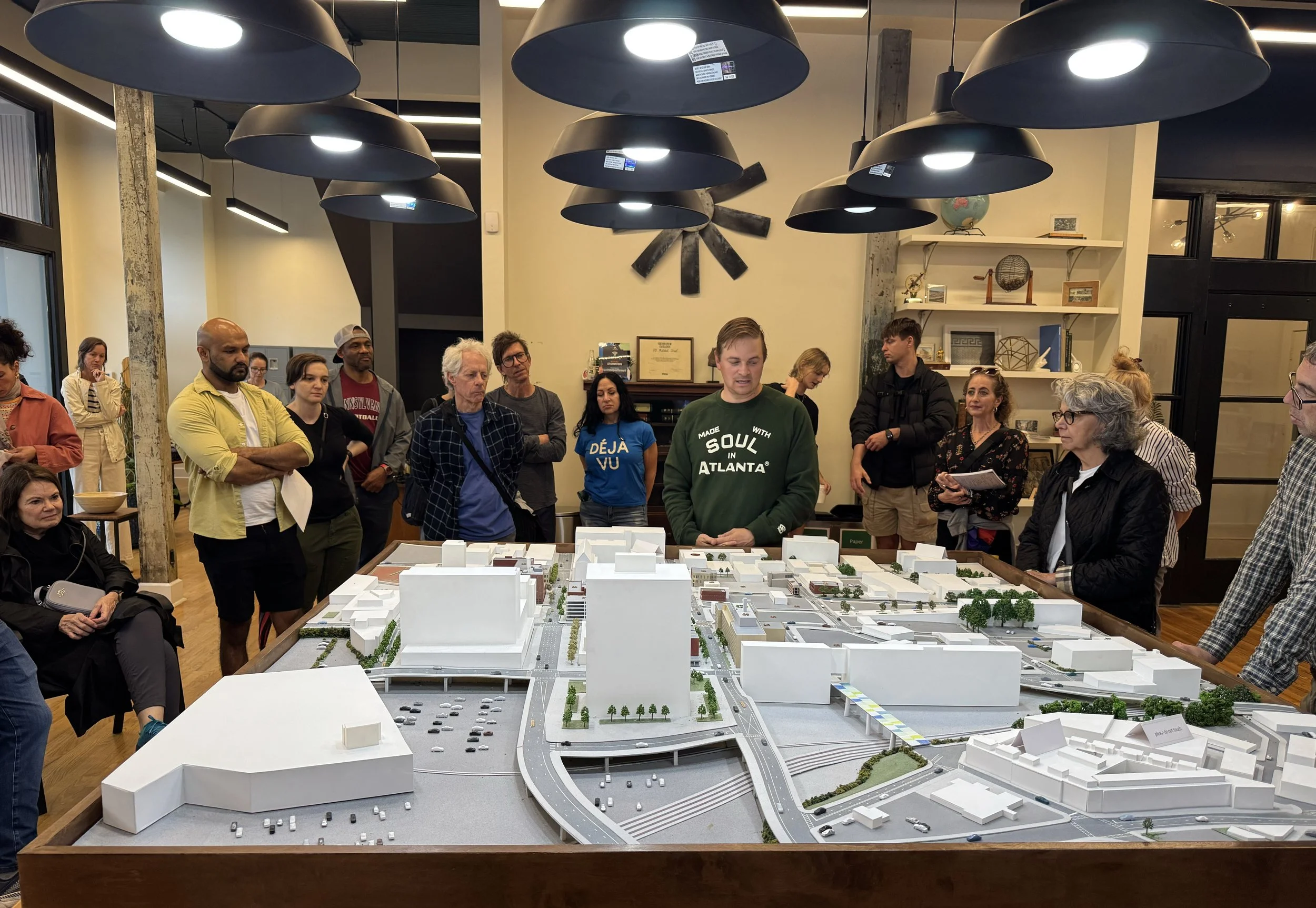
South Downtown, November 3, 2024
One of the great adaptive reuse projects in America is the recent purchase by urban renewal visionaries South Downtown (shown is developer Jon Birdsong) of 50 endangered, mostly empty or neglected, buildings over 16 acres downtown that, incredibly for Atlanta, still retain their historic structural integrity. For the first time in a century, this part of downtown has a coffee shop and a record store. Boutique hotels, new restaurants, co-working spaces are coming in. And there is an emphasis on affordable housing and transit access. The city is excited about this story, and dozens of participants turned out, too many for the hard hats that had been reserved for us to get access to the spaces under construction.
Olmstead Linear Park, December 8, 2024
America's foremost landscape architect, Frederick Law Olmsted spent years wandering through the beauty of nature, and asked himself, how can people in cities be given the chance to wander too?
After Olmsted designed New York’s Central Park, he designed a series of parks in Atlanta at the end of the 19th century. Olmsted popularized the concept of parks as essential, egalitarian, and naturalistic urban spaces. Our Drift was a forest walk with landscape architect Spencer Tunnell and forest ecologist Ranger Jonah McDonald, shown at right, to share the various aspects of Olmsted’s vision, and explore the challenges of maintaining and preserving biodiverse urban streams and wildlife habitats and forests.
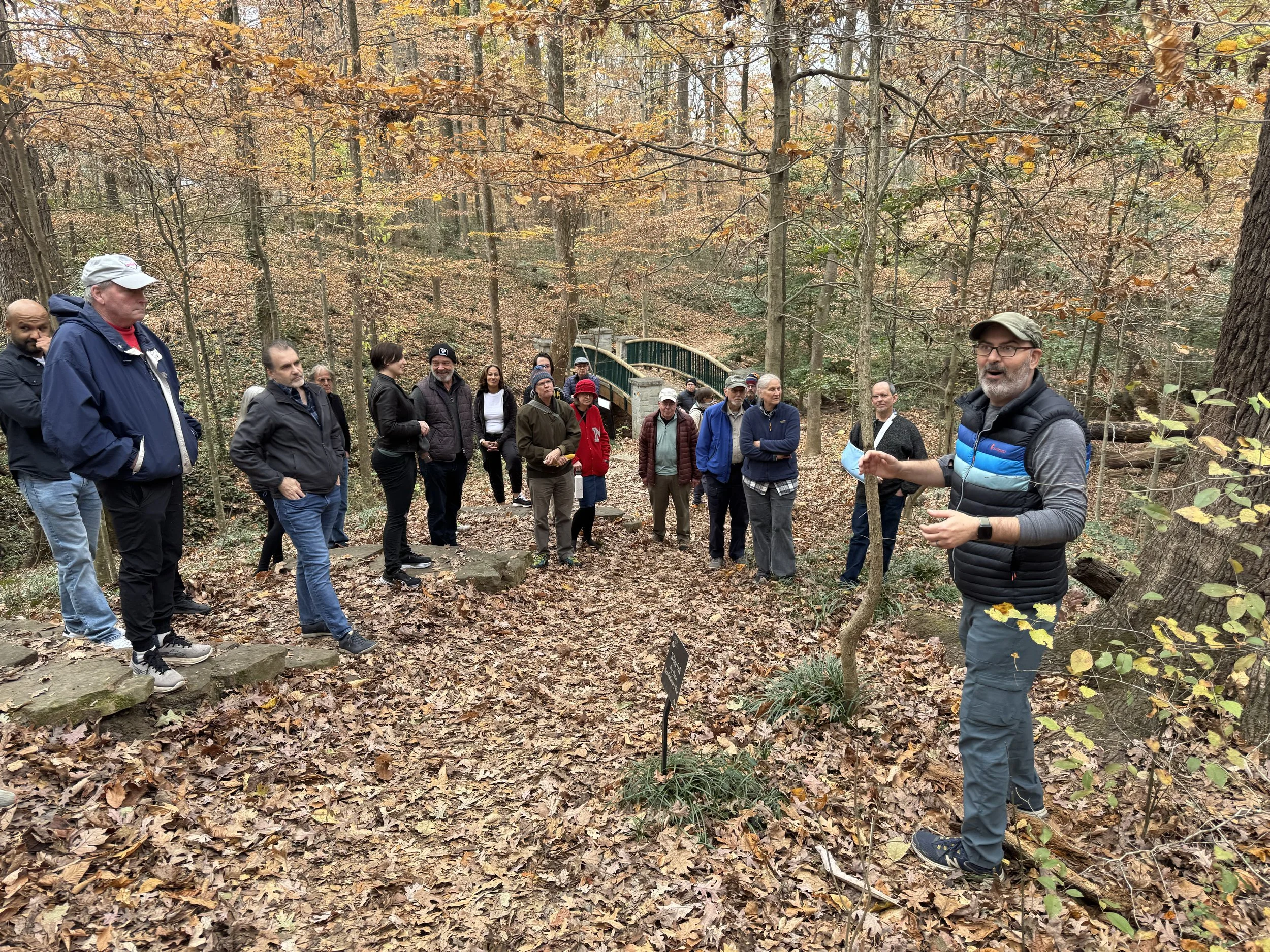
The 1906 Atlanta Race Massacre anniversary
September 22, 2024
The Remembrance Coalition for the 1906 Atlanta Race Massacre asked Drift the Map to lead a walk to commemorate one of the most violent spasms of racist violence in American history. Journalist/Preservationist Ann Hill Bond led us in retracing the steps of the 10,000 person mob who rampaged through downtown Atlanta, lynching any Black person unfortunate enough to be in their path. This event foretold the founding soon after of the Ku Klux Klan and the 1915 lynching of Atlanta Jew Leo Frank, events that foretold the founding of the National Association for the Advancement of Colored People (NAACP) and the Anti-Defamation League. In the photograph above, Bond is showing the location of the murder of the unarmed Rayshard Brooks at a Wendy’s drive-through by the police in 2020 along the same path as the massacre 114 years before, leading some people to ask if history must repeat itself so relentlessly.
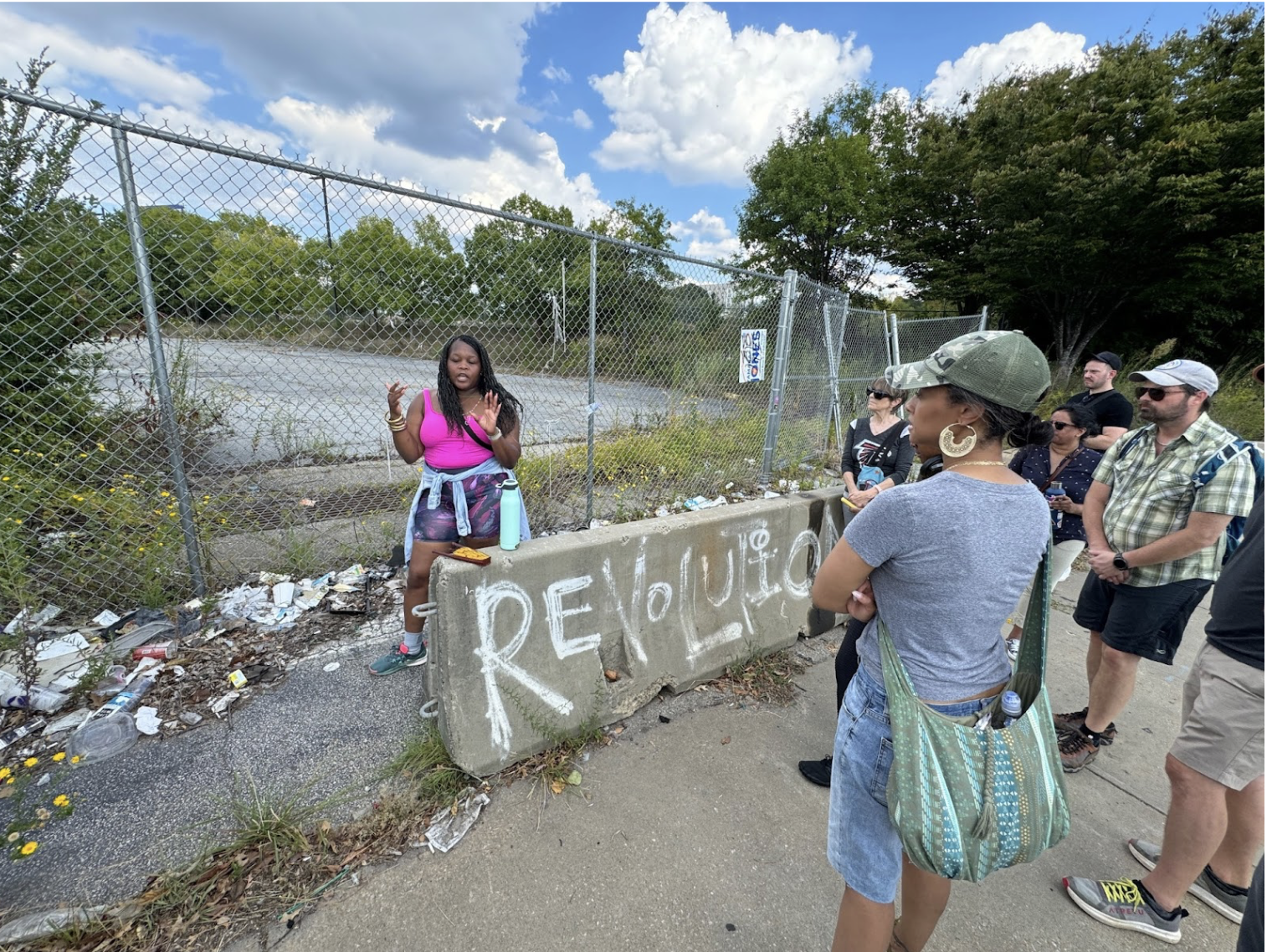
The Stitch, February 11, 2024
When the interstate highway was built through downtown Atlanta in the 1950’s, it separated historic neighborhoods, led to the death of walkability, and ended the viability of a livable urban core. Now Central Atlanta Progress is planning “The Stitch”, a transformational $750 million plan to bury the highway under a park and reconnect these neighborhoods with greenspace and affordable housing. Accompanied by a member of the City Council, we had 70 people walking the perimeter of this project, crossing highway overpasses, dodging traffic on streets not designed for pedestrians, imagining a more livable Downtown.
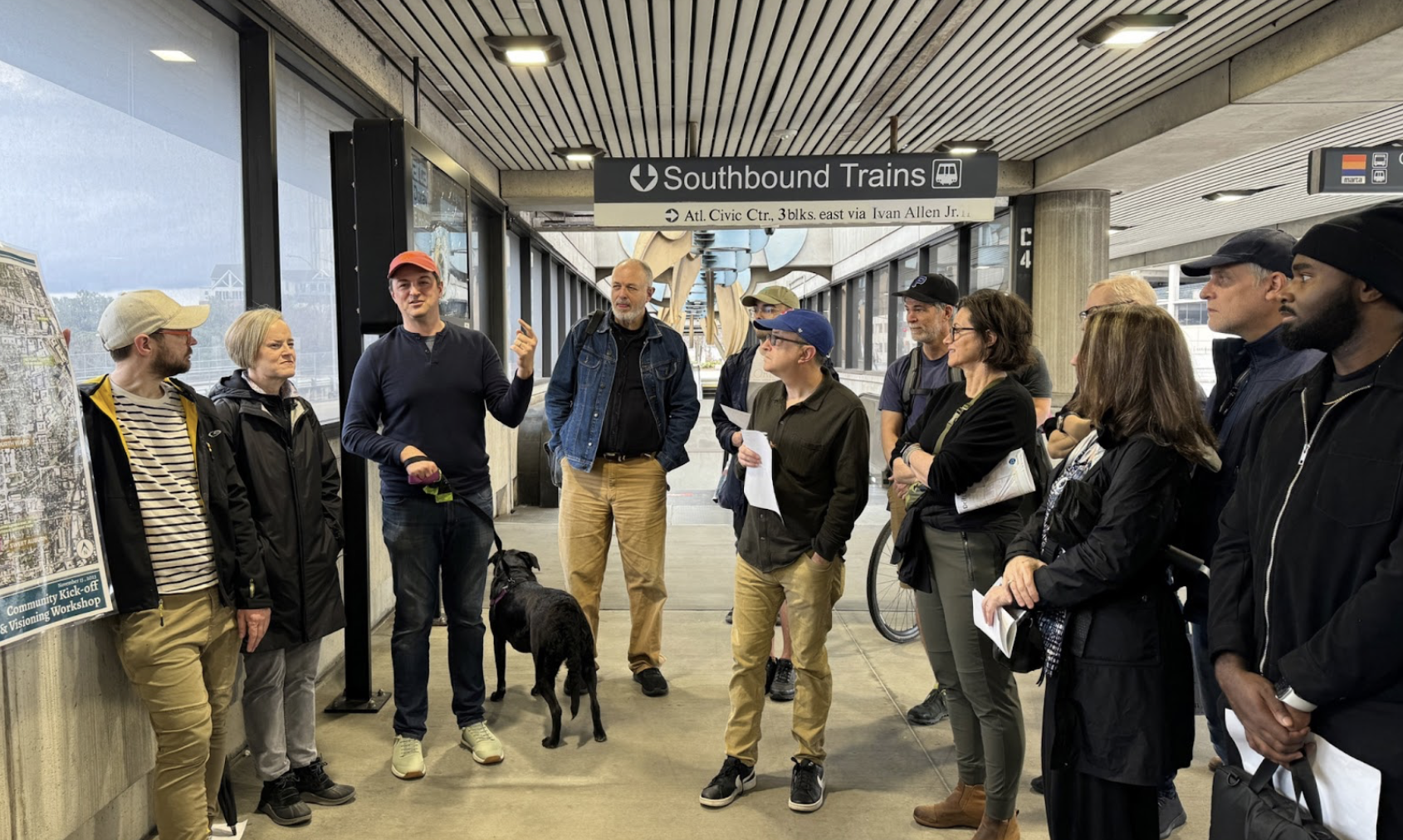
Standing Peachtree, December 9, 2023
My first-ever photo assignment, the one that changed my life and made me a photographer, was in the 1990s, when the Chattahoochee Riverkeeper sent me here in a canoe with a camera to document wastewater pollution into the Chattahoochee. Somehow the beauty and history of the river is so great where Peachtree Creek empties into the Chattahoochee that it seems barely diminished by the surrounding sewage treatment plant, asphalt plant, landfill, railroad, and busy traffic overpass. We led a four hour walk exploring the forest, riverbanks and walking the industrial neighborhood around the river, learning about the indigenous Creek and Cherokee villages that once stood here, and hearing about Chattahoochee NOW’s vision to protect and reclaim Atlanta’s hidden riverfront with a network of nature preserves.
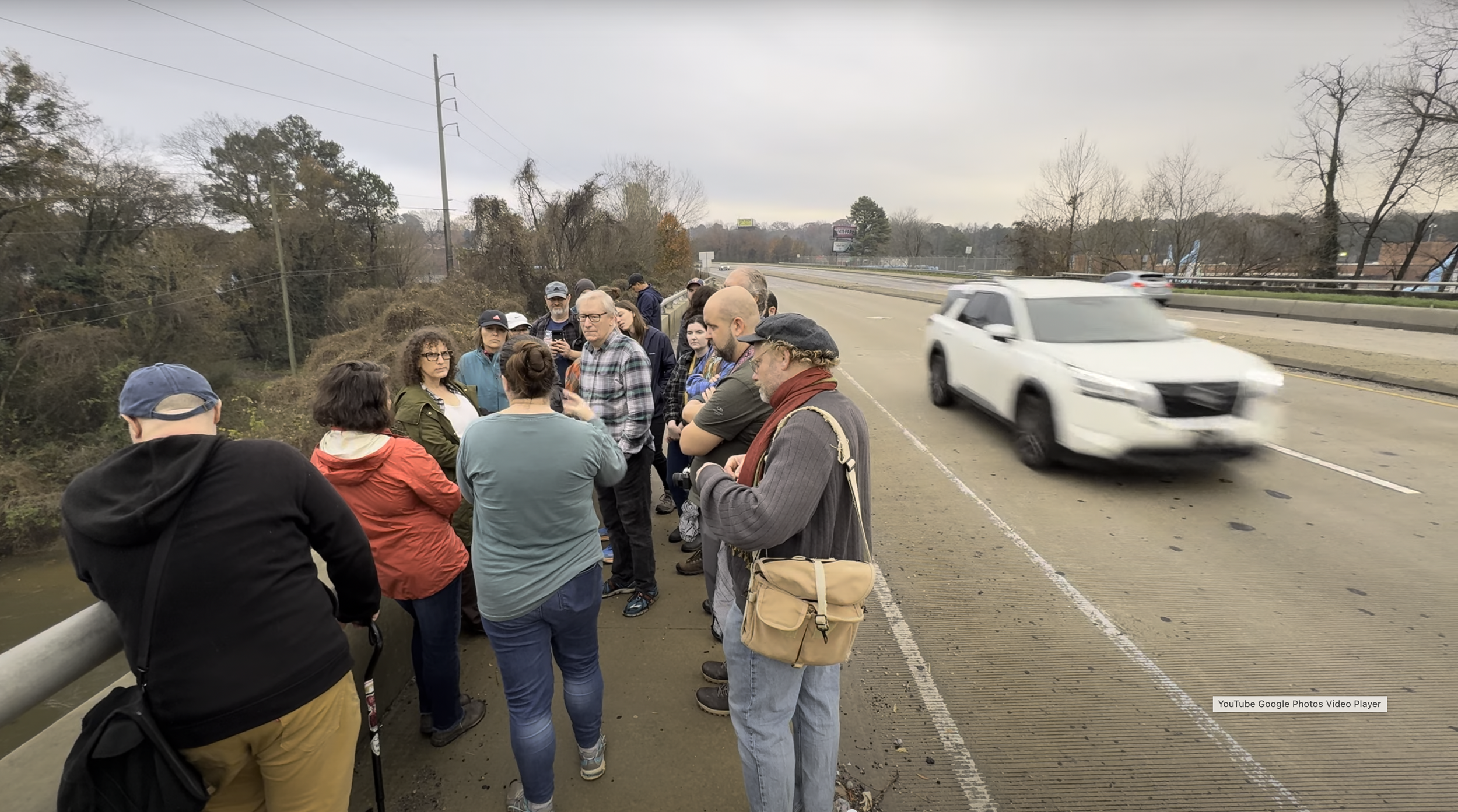
Historic Jewish Summerhill, October 2023
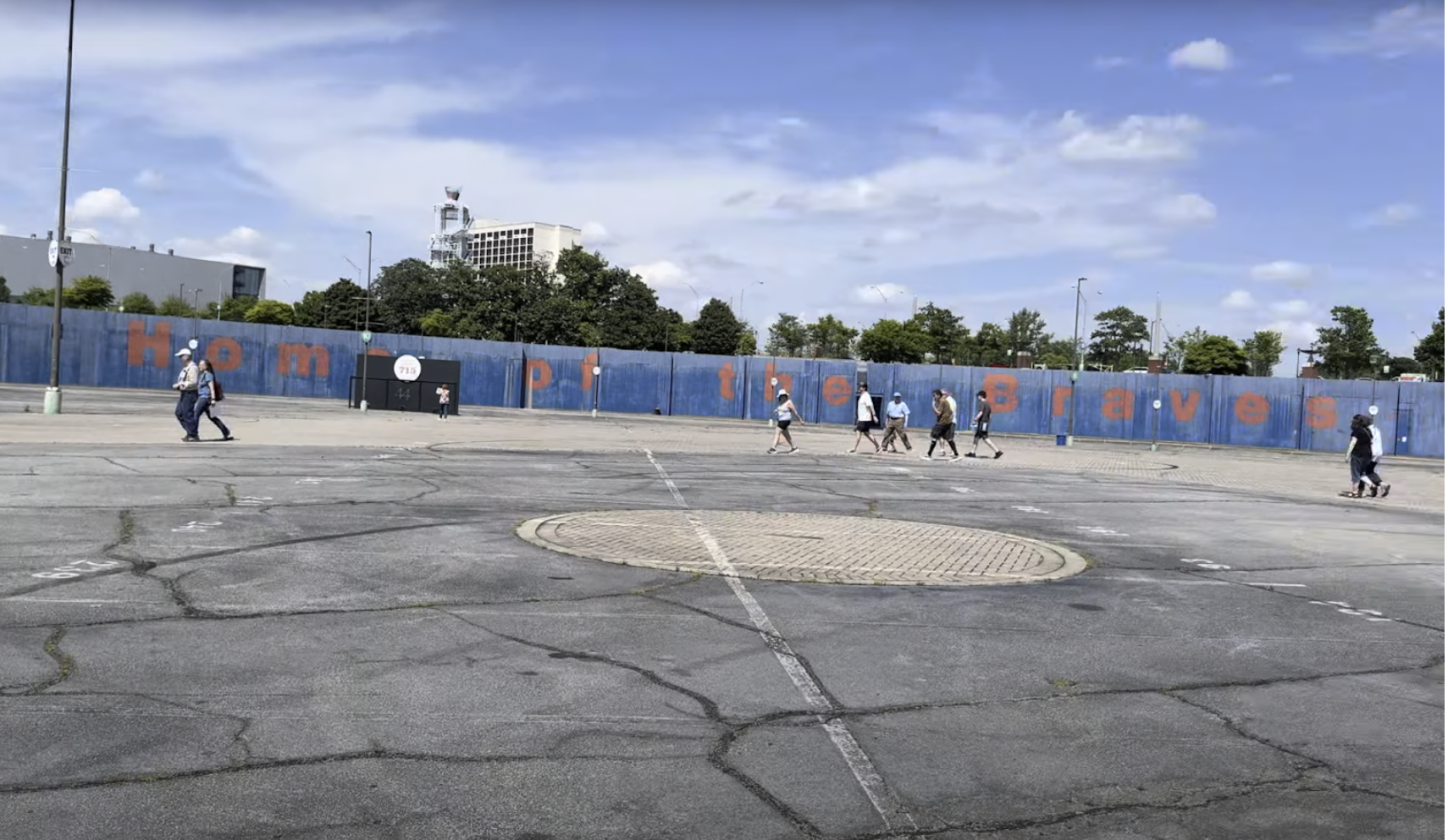
We met downtown to search for the sites of the long-demolished immigrant roots of 19th century Atlanta Summerhill. This community of Ashkenazi, Sephardic, and Greek immigrants was also one of the first settlements of freed slaves after the Civil War, and thrived from 1850-1950 along Washington Street, Capitol Avenue, and Pryor Street before the interstate highway was built over it, followed by the Braves and Olympic Stadiums. Here you see participants running the bases on the site of the former Braves stadium, where Hank Aaron broke Babe Ruth’s home run record. It was also the site of the historic Jewish hospital, and so many multigenerational Jewish Atlantans say that their grandparents were “born on third base”.
25th Anniversary of the Freedom Park Conservancy, October 1, 2023
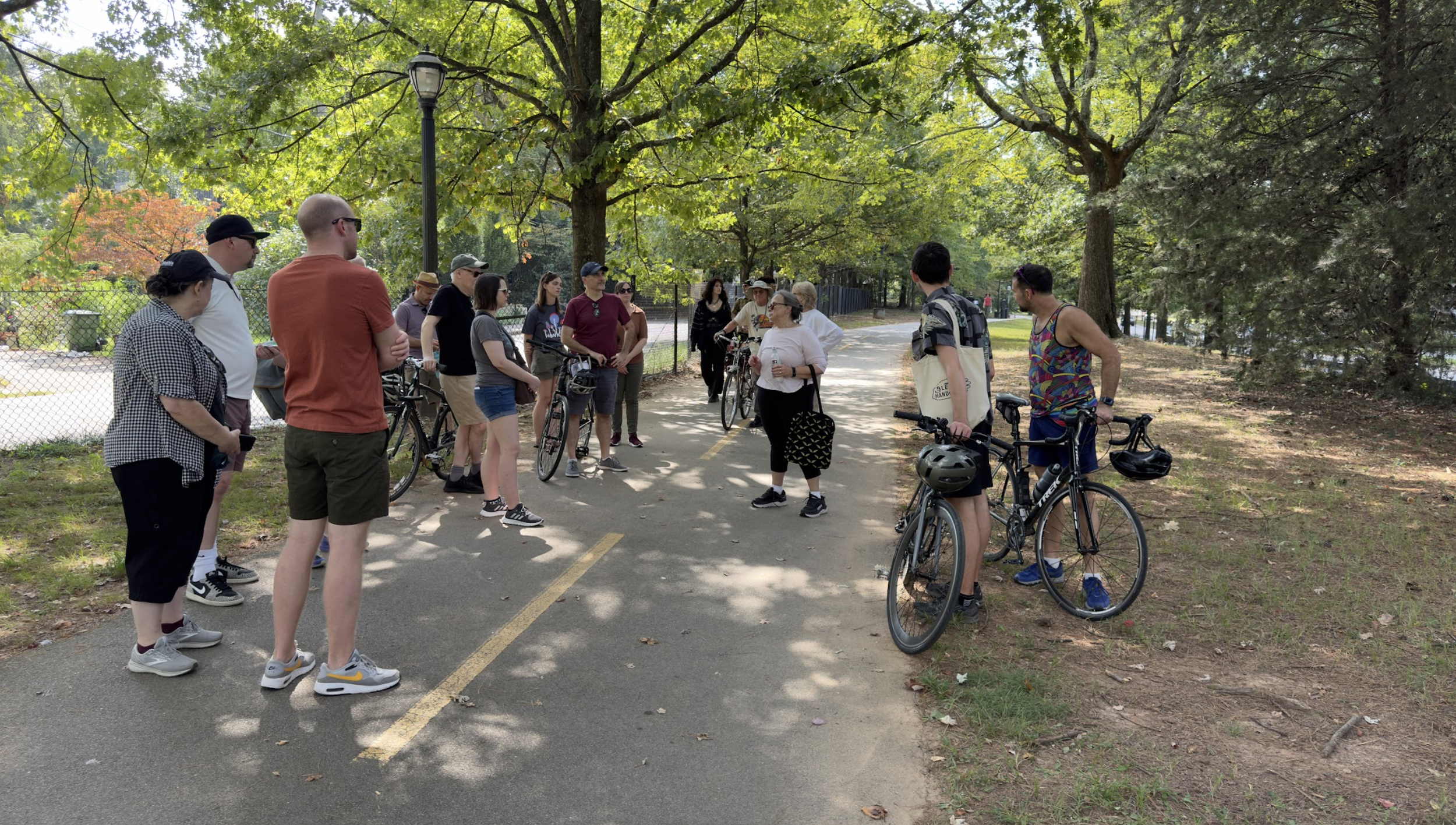
Mira and I were asked to lead one of our first Drift the Map events to celebrate the 25th anniversary of the founding of the Freedom Park Conservancy. This linear urban green space was created from a citizen-led effort to stop freeway construction, and now offers miles of trails for walking, biking, public art, and connects two Nobel Peace Centers (the Jimmy Carter Presidential Library & the Martin Luther King Center). Some of the participants on our walk were arrested in 1980’s-era acts of civil disobedience, and told us stories of chaining themselves to bulldozers in their effort to stop the highway. Their efforts succeeded after years of fighting and court battles. Mira’s opening poem was adopted afterwards by the Freedom Park Conservancy as their official Land Acknowledgement Statement.
The Funeral Procession of Dr. Martin Luther King, Jr., September 10, 2023
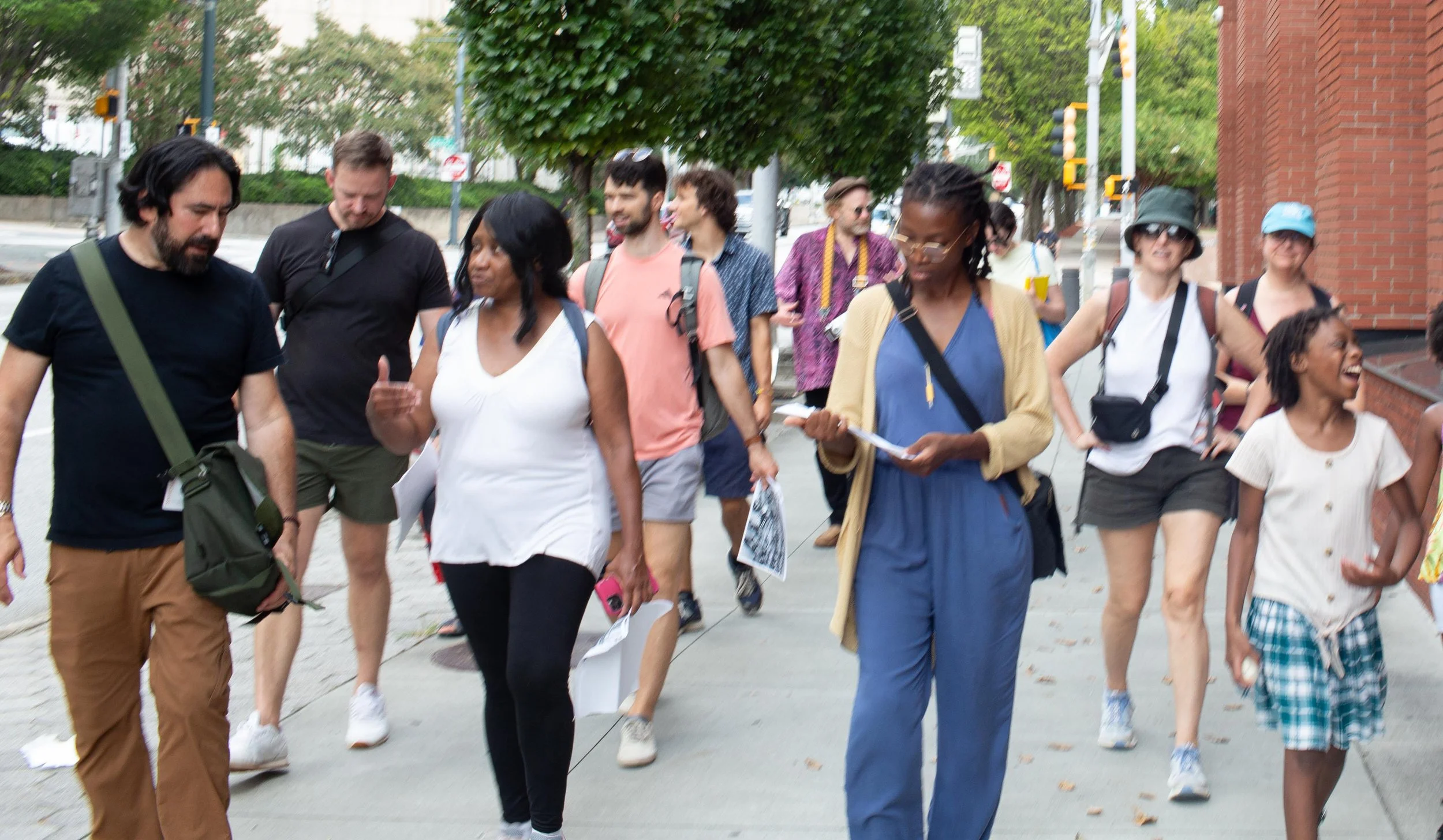
In 1968, after the assassination of Martin Luther King, Dr. King’s casket was carried via horse-drawn carriage three miles across downtown from his home pulpit, Ebenezer Baptist Church, to Morehouse College. We retraced that journey to rephotograph iconic news images of Andrew Young, Rev. Jesse Jackson, and Jackie and Ted Kennedy leading hundreds of thousands of mourners through a cityscape so changed by failures of urban planning over half a century that almost none of the original architecture from those scenes remain. At this site, Dr. King’s funeral procession had encountered a Klan protester holding a sign. With the help of A/R, we saw the protestor standing before us in 3D and felt the terror of encountering such hatred.
Oakland Cemetery, August 2023
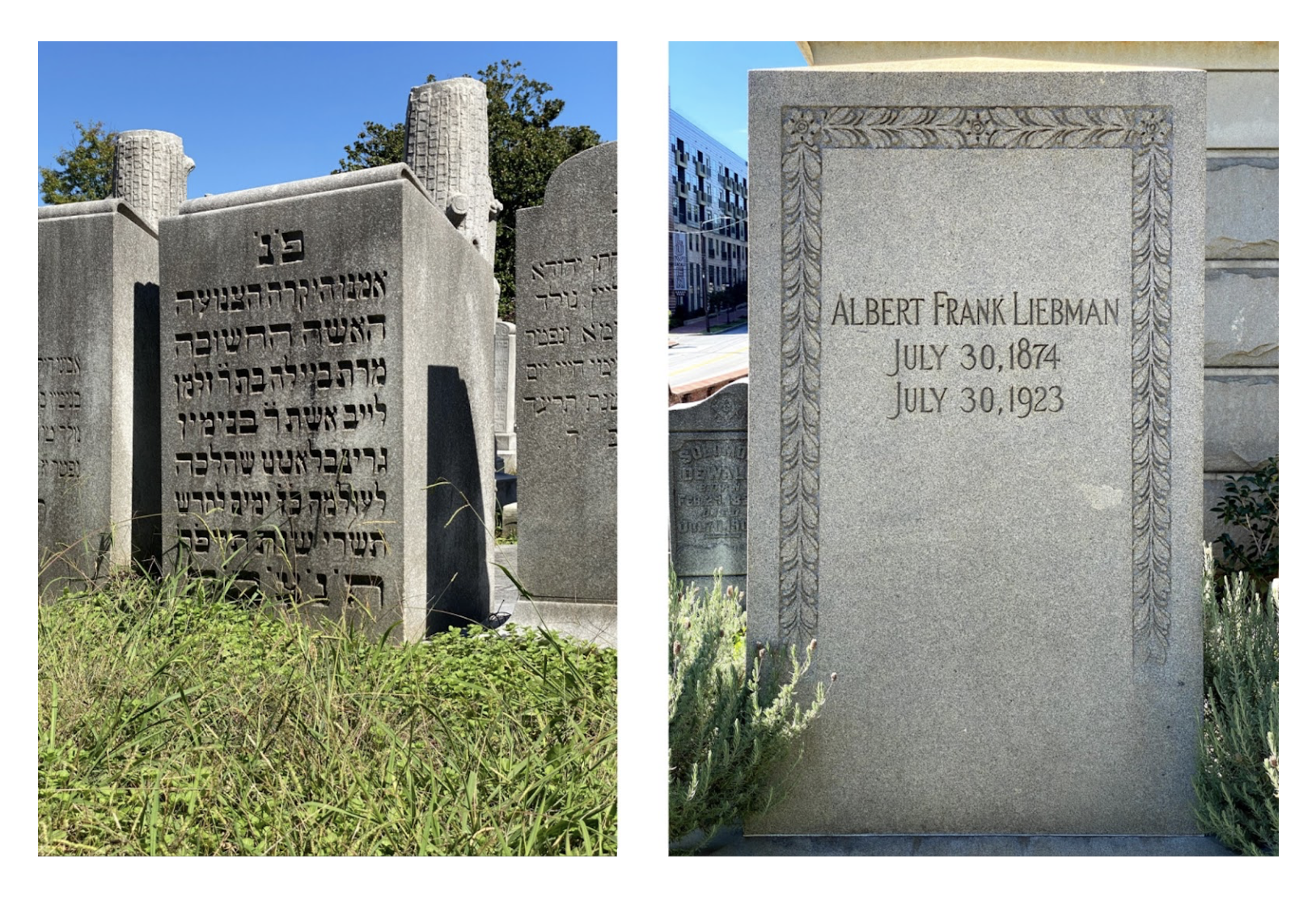
Historic Oakland Cemetery is Atlanta’s oldest public park and the final resting place of many of the city’s most noted citizens. Less than a mile from downtown, its 48 acres are full of treasures – history and gardens, sculpture and architecture, ancient oaks and magnolias. We led this walk in partnership with the Breman Jewish Museum because the cemetery is a fascinating time capsule of American Jewish immigration history. It contains three distinctly different Jewish burial areas reflecting different eras and traditions. A crowded Orthodox section of Russian Jewish immigrants is dense with Hebrew gravestones, while the burial areas of assimilated Reform German-Jewish immigrants reflect a community who had largely abandoned the use of Hebrew by the 1890s.
in collaboration with Thread ATL, a nonprofit organization advocating for improved urbanism in the City of Atlanta
